
When looking at a cookbook, how often do you stop to consider its structure, language, and cultural influences when thinking about how the narrative of recipes is presented? It’s easy to overlook how powerful the overarching Western perspectives are in shaping cookbook storytelling, thinking though sections focused on breakfast, lunch, snack, dinner, and then dessert. But for many cultures, that’s not as relevant or applicable to their culinary heritages.
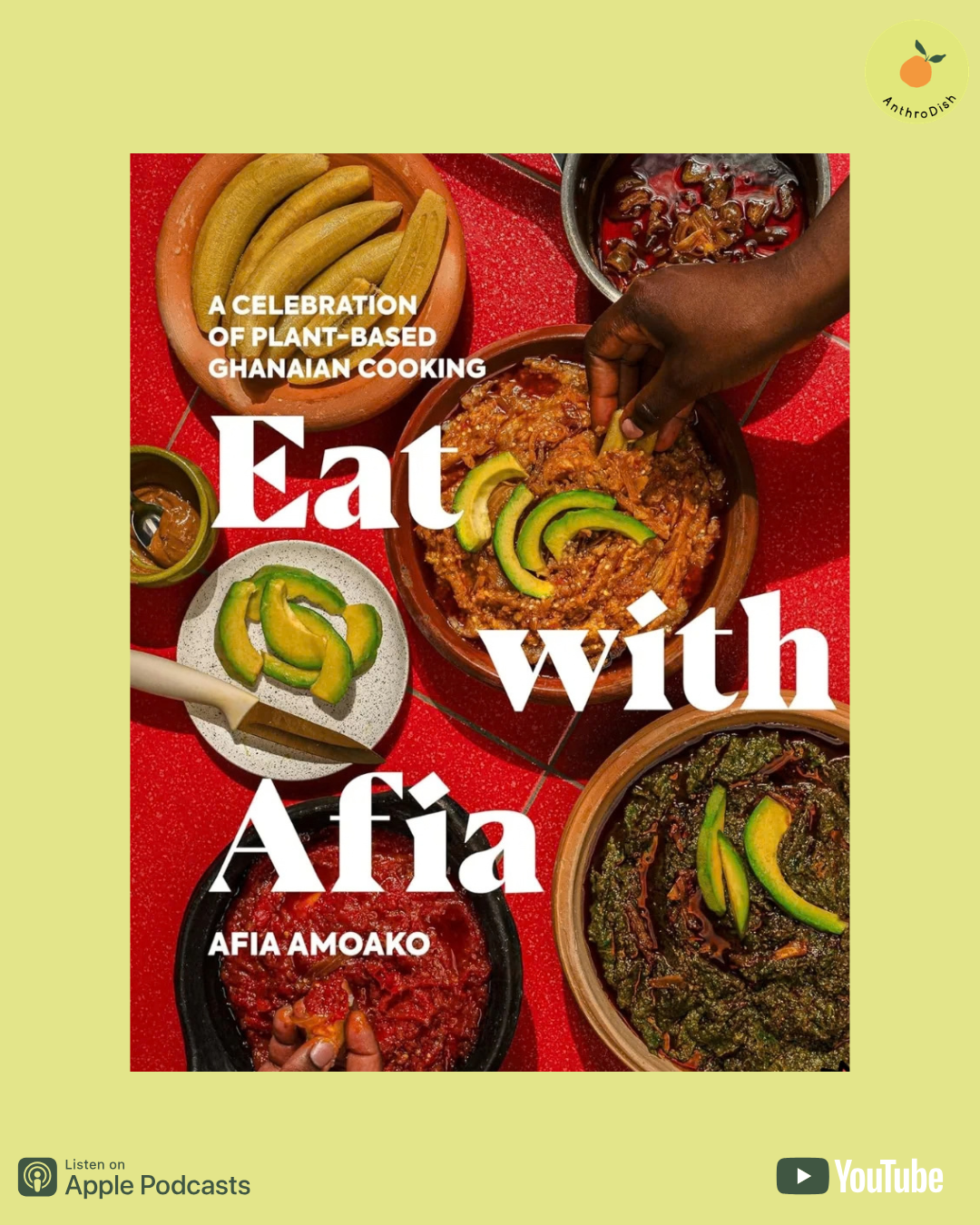
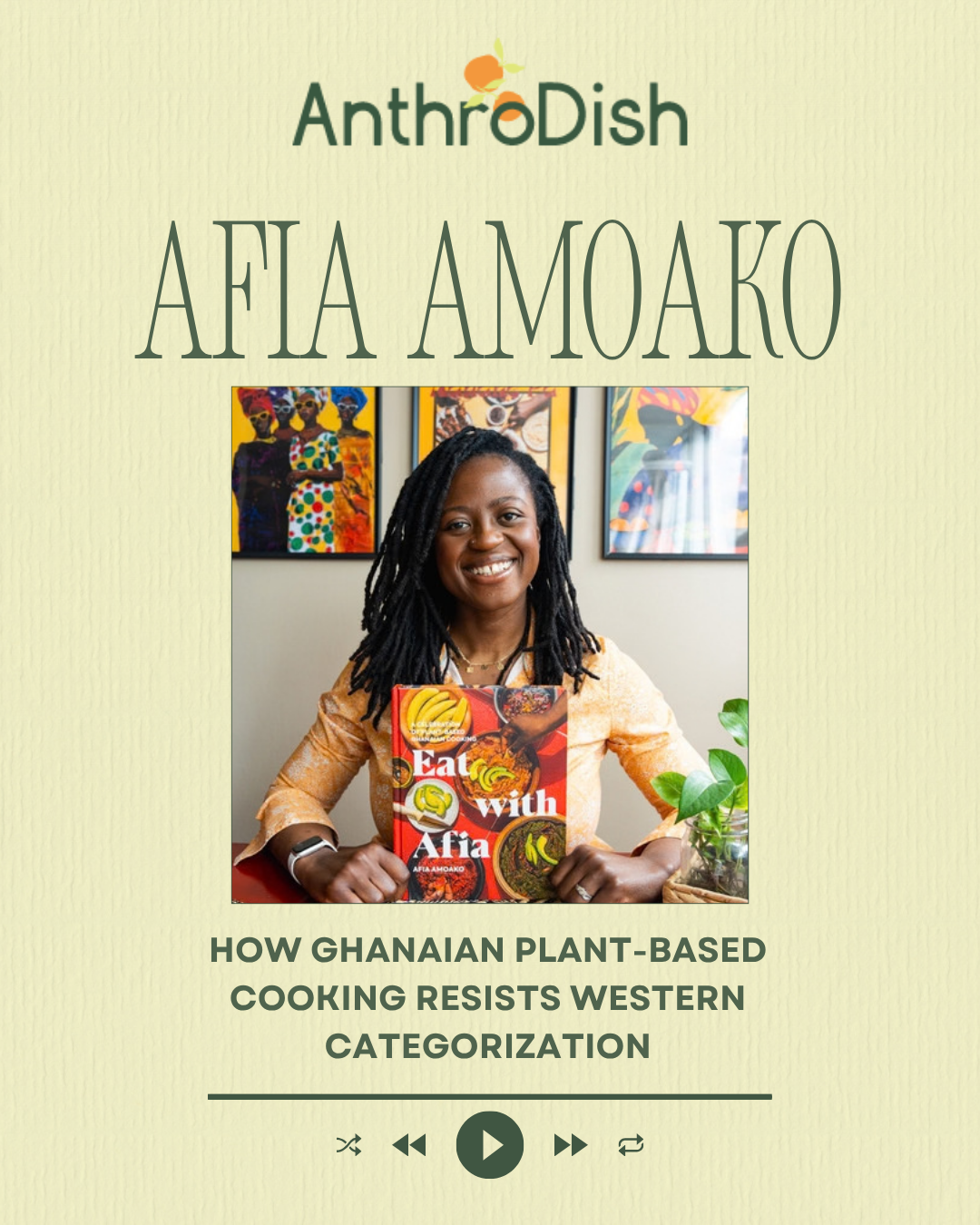
My guest this week, Afia Amoako, unpacks some of these overlooked considerations in conversation today. Afia runs Eat with Afia (@eatwithafia), a social media platform where she highlights Ghanaian food through culture, history, and tradition. With her platform, Afia tries to underscore the diversity of culinary traditions as a product of centuries of meticulous food science, agriculture, and understanding of the land. Outside of her blog, Afia Amoako earned her doctorate in Epidemiology and is passionate about the social context of health. She recently released her first cookbook, Eat with Afia: A Celebration of Plant-Based Ghanaian Cooking, which is as gorgeous as it is comprehensive and rigorous.
In today’s conversation, Afia explores how she maintained her cultural roots with Ghanaian cuisines during her transition to plant-based eating, the importance of highlighting diverse and indigenous Ghanaian plant-based foods, the role of fermentation in Ghanaian cooking extending beyond a preservation method, and how she navigated the Western notions of categorization in cookbook development that do not fit the diverse Ghanaian modes of eating.
Resources:
Instagram: @eatwithafia
Cookbook: Eat with Afia
Newsletter: https://eatwithafia.substack.com/
Website: https://eatwithafia.com/
Mauril links to the app & website : Download on iOS | Download on Android | mauril.ca
This collaboration is part of an advertising campaign managed by the agency Podpass for Mauril, developed by CBC/Radio-Canada.