
When thinking about the food and agricultural landscape of Texas, the mind immediately goes to cattle, corn, and cotton—certainly not wheat. But as my guest this week, Dr. Rebecca Sharpless, shares, the region of North Texas had a robust wheat culture from the 1840s until the post-World War Two period. So what made North Texas a great place for wheat? And what are the implications of wheat as culture and cultivator?
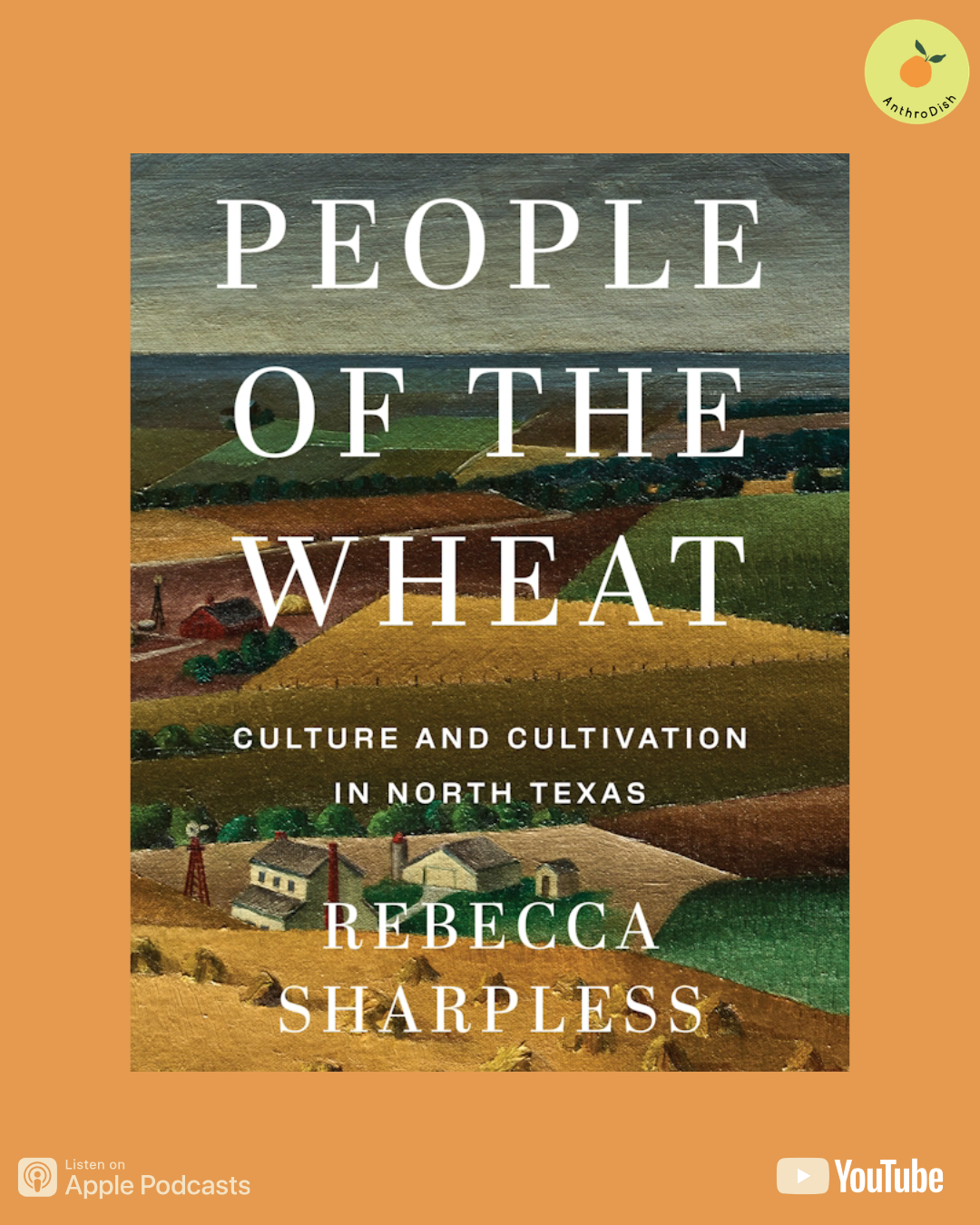
Rebecca is here today to talk about her new book, People of the Wheat: Culture and Cultivation in North Texas, out now through Univeristy of Texas Press. She is a professor of history at Texas Christian University, and writes on food, labour, and women. She is also the author of Fertile Ground, Narrow Choices: Women on Texas Cotton Farms, Cooking in Other Women’s Kitchens: Domestic Workers in the South, and Grain and Fire: A History of Baking in the American South.
In today’s conversation, we’re exploring the forgotten history of wheat harvesting in North Texas, including how it complicates the story of plantation economies and enslavement histories in the south, the profound impact of mechanization on milling and distributing wheat, and the post-war influences that led to wheat’s decline, despite having lasting cultural importance for Western appetites and baking.
Resources: