
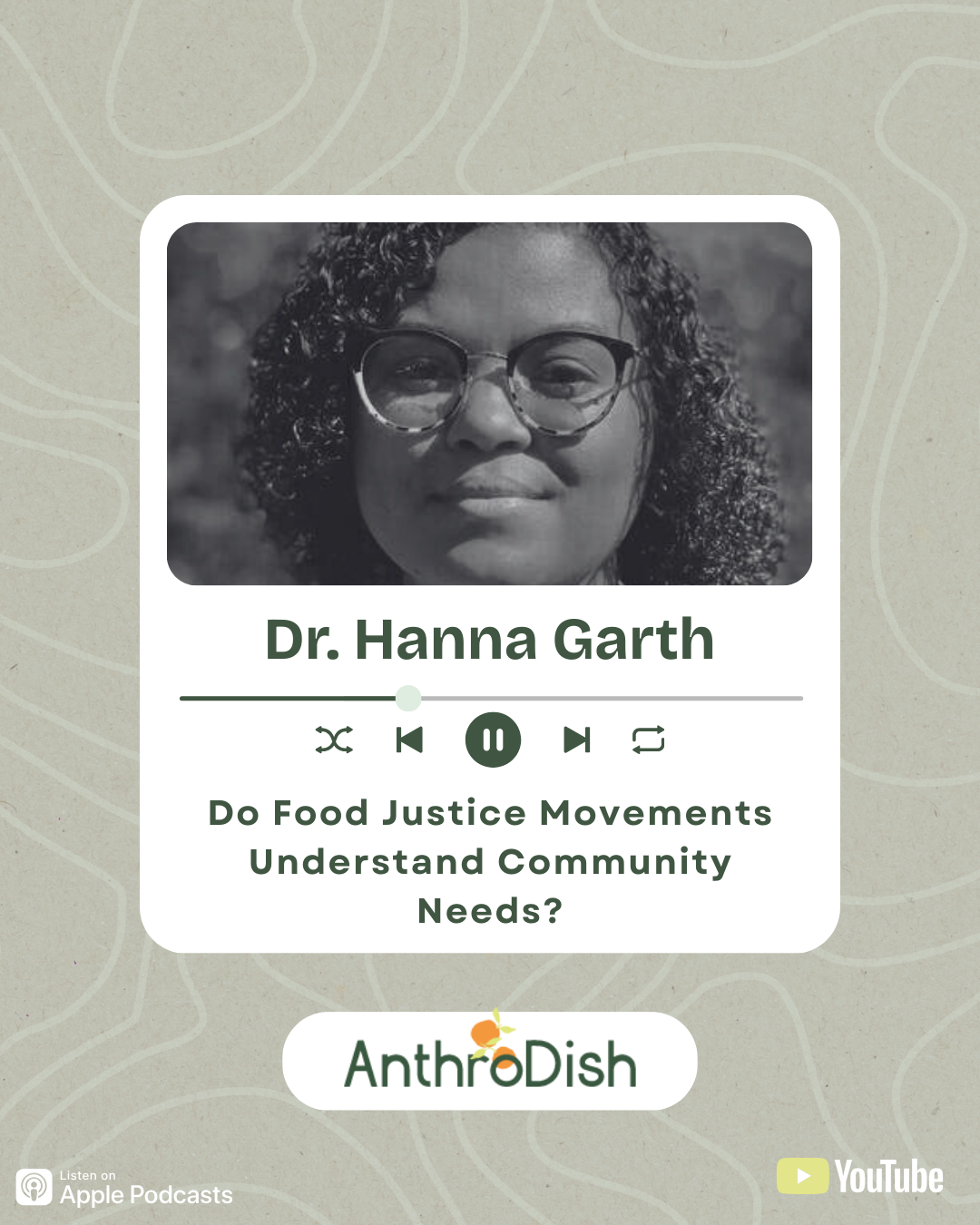
My guest this week, Dr. Hanna Garth, is here to speak to how food justice movements are affected by long-term misconceptions and assumptions about the communities they work with. Hanna is a sociocultural and medical anthropologist, and Assistant Professor of Anthropology at Princeton University, who studies food access and the global food system. Drawing on 15 years of research on the food justice movement in South Central Los Angeles, her second book Food Justice Undone: Lessons for Building a Better Movement is out now with the University of California Press.
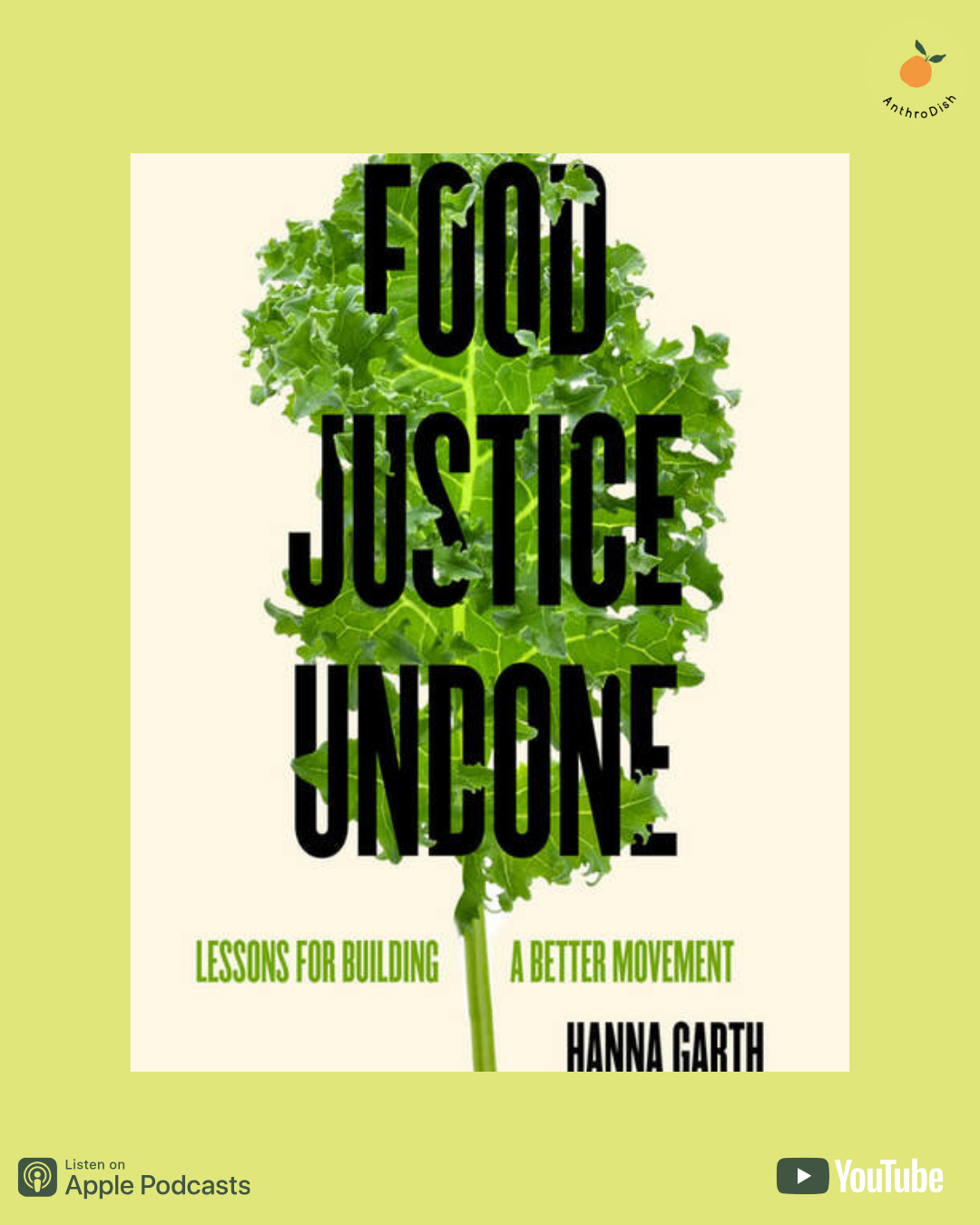
She draws on this ethnographic research to understand issues related to justice and equity in multiracial communities. She studies these questions in Latin America and the Caribbean, and among Black and Latinx communities in the United States. Out of her food justice movement research she also published the co-edited the volume Black Food Matters: Food Justice in the Wake of Racial Justice. She has also published the book Food in Cuba: The Pursuit of a Decent Meal based on long-term research in eastern Cuba, and several articles in top journals in her field and won a wide variety of awards for her research and service.
In today’s conversation, we’re discussing some of the central themes in her latest book, Food Justice Undone, such as the roles of liberalism and whiteness in maintaining power structures and dynamics in food justice movements, the racialized differences in food justice work, and the power of language, statistics, and small moments in shaping the landscape and politics of food movements.
Resources:
Hanna's Website: http://www.hannagarth.com/
Instagram: @hgarth
Book: Food Justice Undone