152: Documenting the Undocumented through Food with Jill Damatac

The idea of a pristine kitchen with clean countertops feels distinctively American, or an all-American idealist. However, the concept of the American ideal, or the American dream, desperately needs to be challenged. How better to do that than through food? My guest this week, author and filmmaker Jill Damatac, does just that in her new memoir, Dirty Kitchen: A Memoir of Food and Family. 

Jill was born in the Philippines, raised in the US, and is now a UK citizen living in the San Francisco Bay Area. Her film and photography work has been featured on the BBC and in Time, and at film festivals worldwide; her short documentary film Blood and Ink (Dugo at Tinta), about the Indigenous Filipino tattooist Apo Whang Od, was an official selection at the Academy Award–qualifying DOC NYC and won Best Documentary at Ireland’s Kerry Film Festival. Jill holds an MSt in Creative Writing from the University of Cambridge and an MA in Documentary Film from the University of the Arts London. Her new book, Dirty Kitchen, is a food memoir of 22 years undocumented in the United States.

In today’s episode, we explore her memoir as a unique narrative that combines recipes, Filipino histories and mythologies, American immigration experiences, food writing, and personal narratives. Jill describes how she structured the book, how Filipino diasporic recipes relate to diasporic and migrant experiences, and the relationship between American foods and rebuilding a sense of self through Filipino foods after living undocumented for many years. 

Resources:

151: What Can Local and Seasonal Food Networks Look Like? with Colin Fontaine

Perhaps now more than ever, there’s renewed appreciation for the intricacies of our food systems' deep dependence on a global supply chain. However, that also raises challenges around our relationships with producers and understanding of food value. My guest today, Colin Fontaine, is here to discuss how to reorient American concepts of food and culture to be grounded in seasonal and local approaches.   

Colin examines food production solutions to achieve more local and seasonal foods, arguing that this issue is more of a cultural problem in need of cultural solutions. Colin has worked in produce procurement, including wholesale distribution, and now works as an East Coast local produce category manager for Sprouts Farmers Market. 

Colin is based in Philadelphia, Pennsylvania, and has an undergraduate degree in anthropology from Bridgewater State University. Through his newsletter Northeast Cuisine, Colin writes about how to localize the food system in the northeastern US, considering past, present, and future lessons about the region and its climate, producers, cultures, and produce availability to build a better and more equitable food system.

Learn More About Colin:

150: Italian Pasta Nights with an American Accent with Renato Poliafito

Throughout this season, we’ve been exploring immigrant narratives around food: roles in food systems, labour, and diasporic food stories. Part of this is making sense of the “ish” elements to identities through food, which my guest this week, Renato Poliafito, does beautifully. 

Renato is a James Beard-nominated restaurateur, pastry chef, cookbook author, designer, and entrepreneur based in Brooklyn, NY. After a graphic design and advertising career, Renato pivoted to food, training as a barista to learn more about the industry, eventually opening Baked in 2005. This kicked off a culinary renaissance in the waterfront neighbourhood, resulting in several cookbooks, a line of mixes, granola, bakeware, a location in Tokyo, and multiple James Beard nominations. After over a decade at Baked, Renato embarked on a new project. He opened Ciao, Gloria in Prospect Heights in 2019, a daytime café and neighbourhood bakery steeped in his Italian-American upbringing and heritage.

Inspired by the monthly pasta events he did briefly at Ciao, Gloria, pre-pandemic, Renato opened a sister concept on Vanderbilt Avenue called Pasta Night, a casual pasta concept, in October 2024. He is also the author of Dolci!: American Baking with an Italian Accent, his first solo cookbook featuring Italian and “Italian American-ish” cakes, cookies, pies, and pastries for any occasion.

In this conversation, Renato explores how he infused his culture and background into Ciao, Gloria, and Pasta Nights, how he switches between his Italian and American heritages to build their menus, and his perspectives on creating community in Brooklyn and Italian-American eating experiences that speak to American-style dining.

Learn More About Renato:

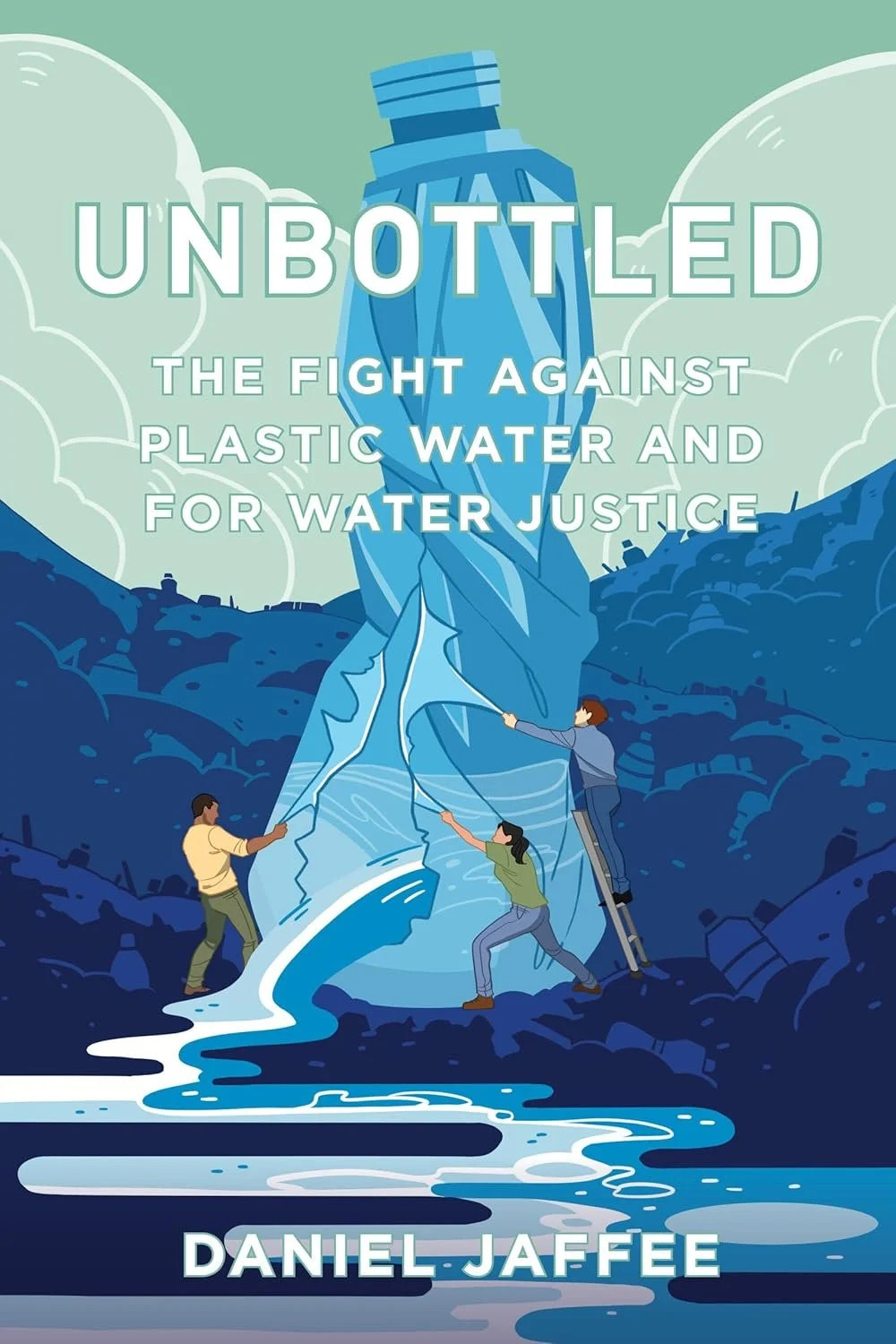
149: Unbottling the Problems of Bottled Water with Daniel Jaffee

A plastic bottle of water powerfully represents the state of our current environmental and health priorities. That water can become commodified while being an essential public service means that who gets access to water can be deeply challenged. How is water justice reached when plastic water privatization has become so embedded in our systems? My guest today, Dr. Daniel Jaffee, is here to explore the depths of these two important parts of the water spectrum. 

Dan is an environmental and rural sociologist, and a professor of Sociology at Portland State University. His research examines conflicts over water privatization and commodification, the social, economic, and environmental impacts of bottled and packaged water, and the social movements that form around bottled water and water justice in the global North and South. He is also the author of Unbottled: The Fight Against Plastic Water and for Water Justice, and Brewing Justice: Fair Trade Coffee, Sustainability, and Survival.

In today’s episode, we’re talking about how cultural and economic shifts shaped the success of bottled water, what its commodification means for the municipal water systems that serve us, and how the global water crisis becomes socially produced.

Resources: 

148: Masala, Maíz, and Movement: Ingredients for Decolonizing Plates with Norma Listman and Saqib Keval

On the show today are Norma Listman and Saqib Keval, looking at the solutions and communities that can be built when activism and ethical values are at the forefront of food creation. Norma and Saqib are the chefs and restauranteurs behind Masala y Maíz, which TIME Magazine named as one of the top destinations to visit worldwide, and its slightly more casual Indian-Mexican sister restaurant, Mari Gold. Norma and Saqib were also just featured in the most recent season of Chef’s Table on Netflix.

Masala y Maíz seamlessly blends Indian, East African, and Mexican flavours inspired by the cultures of the husband-wife team. In addition to being renowned globally for its genre-bending and deeply personal cuisine, Masala y Maíz champions a movement of social justice through food, prioritizing quality of life for their staff and farmers and serving as a testament to the idea that a values-based workplace can also be a thriving workplace.

In today’s conversation, Norma and Saqib share how they moved the idea of Masala y Maíz from a research concept into a full restaurant, even after not being so sure about staying in the industry for all its shortcomings), how experiences with local flavours on a menu can fuck with your brain and decolonize how you think about ingredients, and the importance of corn in cultural, social, and decolonial approaches to food.

Resources: 

147: What Canada Ate - The Role of Cookbooks in Culinary History with Dr. Rebecca Beausaert

As most historians will tell you, the past can help make sense of a lot of the present, but maybe in unexpected or novel ways—like through cookbooks! We’re living in an intense period (I probably always say this, but it feels particularly challenging right now). With the new Trump presidency, shifts to Canada’s economic stability and food security are top of mind for many—how are we going to afford eating, how can we support Canadian-focused food systems, and who is at the centre of these domestic pursuits? My guest today is Dr. Rebecca Beausaert, here to explore how historical food cookbooks can provide valuable insights into how we make sense of food as a country.

 Rebecca is an adjunct professor in the history department at the University of Guelph. She is also the co-founder and co-director of the increased What Canada Ate website, which is an online repository of digitized historical cookbooks. She is also the author of Pursuing Play: Women’s Leisure in Small-Town Ontario, 1870-1914.

In today’s conversation, we explore the history of Canadian cookbooks from the first Canadian cookbook published in 1825 to today. She looks at how different agricultural, technological, social, and economic shifts impacted what recipes and ingredients appeared on cookbook pages, the untold stories of domestic handbooks and the women that fed farmers, and how cookbooks can paint the story of the ever-complex question around defining Canadian cuisine.

Learn More from Rebecca: