97: How Can We Talk About Bodies and Diet Culture Online? with Ary Maharaj from NEDIC

Diet culture existed in all our ancient societies as well - like who’s statues were made into bodies? I want us to be really specific and particular when we blame social media. I don’t think I blame social media personally for creating diet culture. I think it’s led to some nuances, youngins have access to filters where before you maybe needed digital editing skills to do that.
— Ary Maharaj

With every new year, we get absolutely bombarded by diet ads, fitness discounts, gym memberships (even if gyms are closed during lockdowns), and constant messaging about what our bodies are worth. Even when expected, it’s incredibly overwhelming. So how can we practice more conscious language and information sharing about our bodies, foods, and diet cultures online?

This week, I am chatting with Ary Maharaj, who’s speaking as the Outreach and Education Coordinator for the National Eating Disorder Information Centre (NEDIC). Ary is a qualifying Registered Psychotherapist and a graduate of the University of Toronto’s Master of Education in Counselling and Psychotherapy program. Through his work at NEDIC, he’s striving to take a preventative, proactive approach to helping people with their relationships with food and weight, while buffering them from developing eating disorders.

In our conversation, we’re talking about how younger generations face challenges online with pervasive messaging on Tik Tok and Instagram, how to approach conversations with friends and family members who make comments about any body changes we’ve had during the holidays, and how we can approach food and body image discussions online in more respectful, accessible, and supportive ways. I will just say before this interview starts, that we do talk about eating disorders throughout this, so please consider this and if you are in a good space to listen to these themes before continuing to listen.

Resources: 

96: Why Do Millennials and Gen Z Care So Much About Food? with Eve Turow-Paul

Millennials have the highest rates of depression, loneliness, stress. When you look at Gen Z, it’s high rates of perfectionism. These emotional ailments are influencing our relationship with food culture, technology is making us less productive... taking us away from our in-person communities, and from our connection to nature and our own bodies. Food is this amazing conduit to what makes us most human. I’m holding back on calling the Foodie Movement a cry for help - but it kind of is!
— Eve Turow-Paul

By now, we’ve all heard the jokes about how millennials can’t afford to buy homes because we spend all our money on avocado toast, and have felt the generational divides around class, race, and gender through these prolonged boomer analogies with food. But when you put the jokes aside, a complicated picture of why younger generations care so much about food starts to arise.

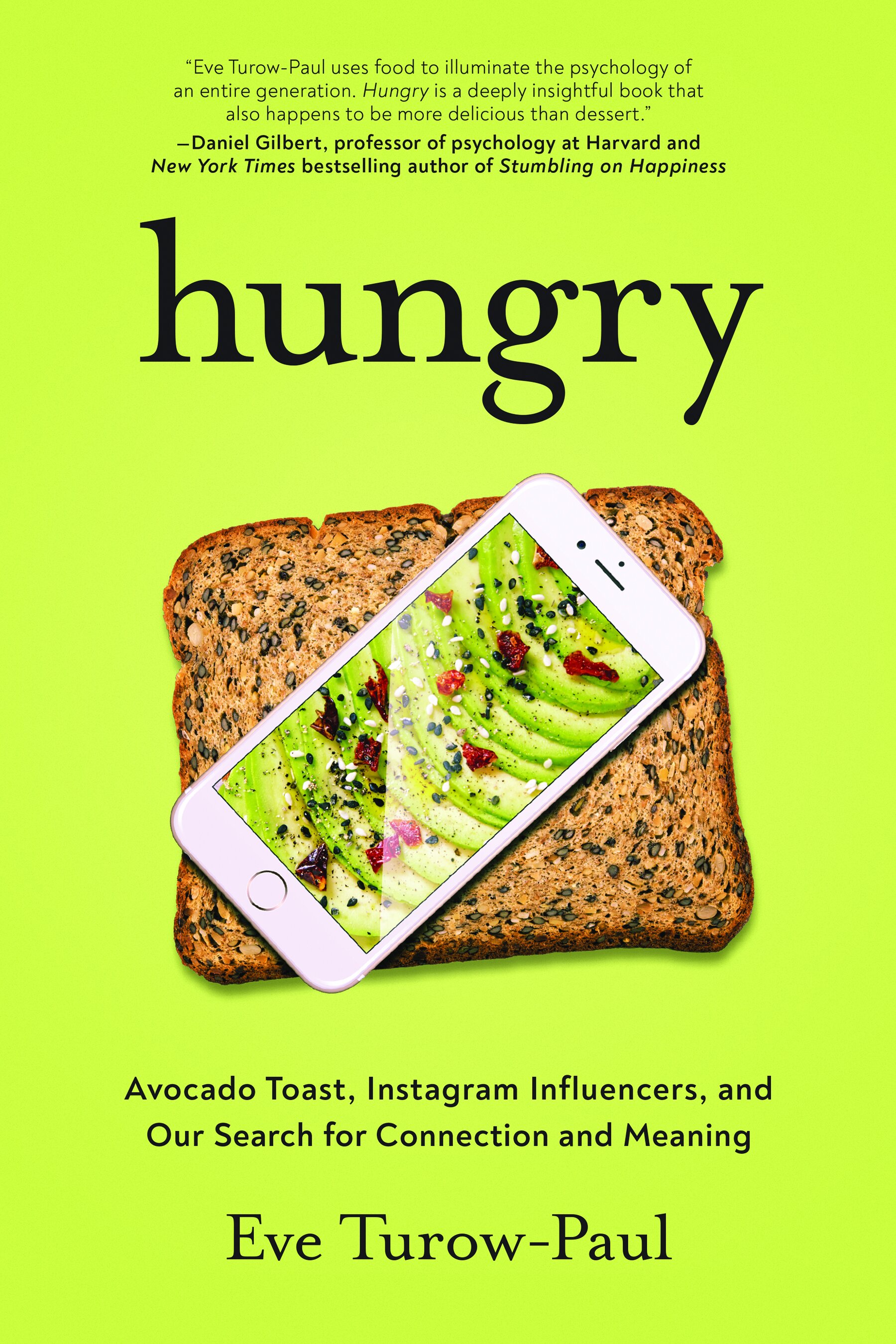
My guest this week, Eve Turow-Paul, is here to explore this in more detail with me. Her recent book, Hungry: Avocado Toast, Instagram Influencers, and Our Search for Connection and Meaning came out during the height of the pandemic, and explores the ways our food behaviours and emotional states interconnect in the digital age. Eve is a writer and the founder and Executive Director of Food for Climate League. Through her writing and non-profit work, Eve focuses on explaining the “why” behind food and lifestyle trends, and helps companies use food culture as an avenue for physical, mental, and environmental health.

Eve is on the show today to break down some of the biggest motivatiors behind millennial and Gen Z food trends (and whether you see differences in how we relate to and through food), and how we can navigate our digital selves and our loftier aims of reconnection to nature in more digitized, isolated landscapes.

Learn More About Eve: 

95: Post COVID Taste Loss with Rebecca Ma

When we think about COVID, we usually think about the short term health effects and terrifying stories from the ICU. However, there’s a lot to learn about the ways that long haul COVID symptoms affect people. Those that experience long term symptoms are sometimes referred to as “long haulers” on Twitter threads, and you don’t see much covered about their health challenges across the media. But with the high rates of infection across the US and Canada, understanding how people will be negotiating these symptoms and recovery is an important element in understanding what comes next for all of us and how to help each other in the recovery stages of the pandemic.

One of the symptoms of long COVID is a loss of taste, smell, and appetite. I’ve heard accounts of this in little snips across Instagram, but wasn’t really sure what that meant, or just how long long COVID really was. My guest this week, Rebecca Ma, is a Masters student of food anthropology in Idaho. She is also a COVID survivor who is experiencing long COVID. Her Instagram account caught my attention a while back, @postcovideatsandsmells, as it is a documentation of her experiences trying different foods after losing taste and smell during her COVID recovery. She discusses how old favourites aren’t as they were, and what new elements of food she gravitates towards through this.

We talk today about her sensory experiences with food post-COVID, and how she uses her knowledge from anthropology to bring these experiences more public through her Instagram account.

Learn More About Rebecca: 

94: Lookout - Food Strategies in a Fire Tower with Trina Moyles

Today’s episode marks a big first for me! This is the first time I’ve been able to have a guest return for a second episode, which I’m so thrilled about. This week, Trina Moyles is back!

If you’re a longtime listener, you may remember her from AnthroDish’s first season, where she spoke about the global experiences of women farmers from her beautiful Women Who Dig debut book. This week, we’re having a conversation around her all new book, Lookout: Love Solitude, and Searching for Wildfire in the Boreal Forest through Penguin Publishing. Lookout came out in March 2021, and I honestly could not put it down. The book is a powerful memoir about her experiences working alone in a remote lookout tower near Peace River, Alberta, and her eyewitness account of the unpredictable nature of wildfire in the Canadian north.

Today, Trina shares her experiences as a fire tower lookout and how she navigated storing, growing, and cooking food. Being a lookout is an isolating experience, and she explores in our conversation the little moments with nature and making foods in the tower that taught her more about herself and the world around her. I will not give more away, but I will say, her descriptions of the baking she did at the tower were SO good, and leave you hungry!

Learn More About Trina:

93: How Do Canadians Plan for Better Food Systems? with Dr. Tammara Soma

Here at AnthroDish, a lot of the focus in my conversations with people is around the eating behaviours of communities, or what food preparations say about individuals… but we don’t often get to think about what their food waste behaviours say about them. So what influences how people waste foods? Why do we have so many memes about that half empty and wilted bin of wilted spinach at the back of our fridges?

My guest this week, Dr. Tammara Soma, looks at food waste patterns and behaviours in Indonesia and in Canada. She is the director and co-founder of the Food Systems Lab, and is Assistant Professor at the School of Resource and Environmental Management at Simon Fraser University where she conducts research on issues pertaining to food system planning, community-based research, waste management and the circular economy. Her dissertation investigated the factors that influence urban household food consumption and food wasting practices in Indonesia, and the ways in which food systems consideration can improve urban planning decision-making.

Today, we’ll be exploring what influences people’s food waste, and how food systems planning methods can be used to better contribute to our food planning and security in Canada.

Learn More from Dr. Soma! 

92: Season 7 Launch! (Solo Episode)

It took a while, but I'm back for the 7th season of AnthroDish! Starting off as usual with a solo episode, giving some quick updates about what's been going on since season 6 wrapped in March 2021, some huge personal changes (I'm finally a Doctor!), and some reflections on what sorts of energy and themes I'm bringing in this season. 

Regular interview episodes will be back as of next Tuesday, and I can’t wait for you to hear them!